
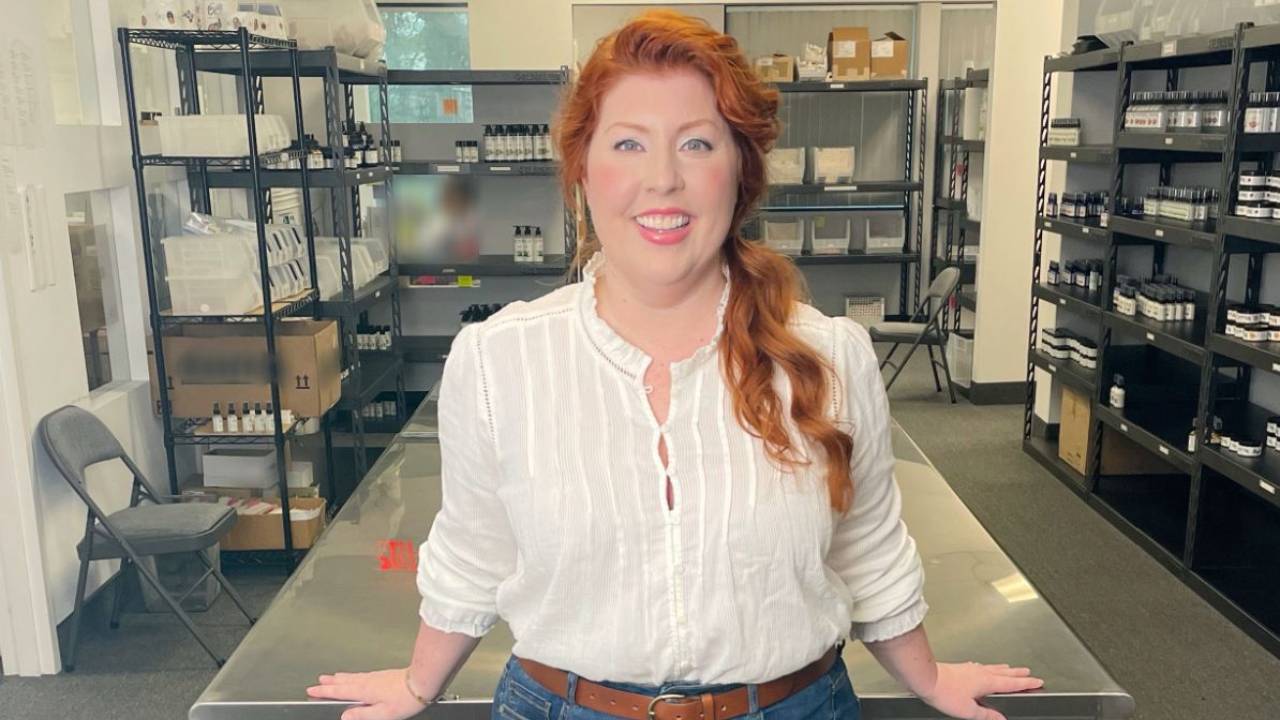
This week marks one year since the sale of Erin's Faces became official. I ran that company for 14 years, and since then I've kept coaching founders who are in the thick of everything I just stepped away from. So today felt like a good day to write down what I'd tell you if we were sitting across a table from each other.
Three things come to mind:
- What I got wrong for years
- What I got right without realizing it
- What I'd do differently if I started over tomorrow
Wholesale doesn't make you a "real" brand
In the early years, I believed we had to be in a lot of wholesale accounts. If we weren't on enough shelves, I thought we weren't looked at as being good enough or fancy enough. Knowing what I know now, I don't think that was ever true.
COVID came. A lot of my founder friends had much of their business in wholesale and brick-and-mortar stores, and those stores were closed. They were panicking. Erin's Faces sold direct-to-consumer (DTC), and I was panicking too, because we were having the biggest numbers in our history!
The pandemic wasn't the only thing that changed the picture. Some of those same friends had been carried by a retailer from its early days, and when celebrity brands started launching, a lot of those early founder brands lost their spot to make room for the celebs.
Wholesale can be a good piece of your business. Just know that when most of your income depends on someone else's doors staying open and someone else's shelf space, a lot is out of your hands (including when you'll get paid). You never know what's coming, so make sure customers always have a way to buy directly from you.
Keep records someone else could pick up
In June of last year, I signed a letter of intent with Earth Harbor, which meant we were committed to each other. That's when I needed to hand over a LOT of paperwork. They needed profit and loss statements, tax returns, and a list of every vendor we used - where each ingredient, bottle, and label came from, what went into every single product, and all of our formulas.
I had all of it. Every bit of our bookkeeping lived in QuickBooks, so I pulled the reports and sent them over. Tax returns? Done, and on time, of course (for the record, being late on my tax return gives me hives 😊). And the vendor lists and formulas already existed, because my team needed them to do their jobs.
I'd love to tell you that was a master plan for selling someday, but it was just how we ran the place. It made that part of the sale clear and quick, and it's the same documentation that lets your business keep running when you take a vacation. If the only place something lives is in your head, write it down this month.
Start smaller than you think you should
If I started a product business tomorrow, I would pare it down a LOT. I launched Erin's Faces with 50+ SKUs, and they came from different manufacturers that all had different minimum orders. It made everything more expensive and left me with products that were hard to promote, which I wrote about in this post on ecommerce mistakes.
I'd also start with universal products that work for a lot of people, as opposed to niche ones - something that doesn't need much explanation. If you see it on a shelf in a store, you know what it is, you know if you like it or not, and that's it. You can always add more products later (and you'll need to).
I didn't know any of this in 2011, when I was mixing and filling products in my kitchen in Queens. Fourteen years is a long time to learn three things, so please, take the shortcut.
If you want support from someone who has navigated the realities of building, scaling, and eventually selling a product-based business, you can learn more about coaching with me here.
SUBSCRIBE FOR SMALL BUSINESS TIPS
From someone who has been in your shoes.
We hate SPAM. We will never sell your information, for any reason.